


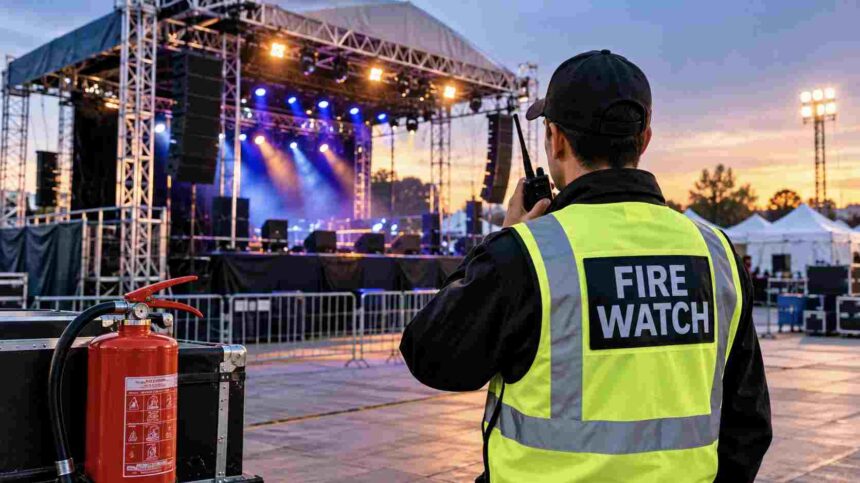
Temporary stages go up fast and come down faster. That speed is part of the risk. Crews bolt decks together, hang drapes, and run power overnight. Generators hum behind the set, feeding cables across the floor. Hot lights hang a few feet from fabric backdrops. In arenas, the building’s sprinklers often can’t reach the stage. One stray spark can find untreated curtain material. An event fire watch keeps trained eyes on every corner. Fuel, power, blocked sprinklers, and logbooks each play a part.
Stage Sets Pack a Surprising Fuel Load
Fuel load just means how much burnable stuff sits nearby. On a festival stage, that list grows long. Synthetic drapes can carry flame across a rig in seconds. Plywood decking, plastic turf, and rubber cable ramps add more.
Then come the effects. Propane flame jets and Sparkular cold-spark machines sit close to backdrops.
Why Do Generators and Cables Need Watching?
Big shows draw serious power through temporary lines. A diesel generator working hard throws off real heat. Cables have their own problem. Overloaded lines warm up, a problem called resistance heating. Insulation melts, and a short circuit can follow.
Stage lights add risk as well. Hot fixtures hung on overhead truss frames can scorch drapes.
Indoor Rigging Can Blind a Building’s Defenses
Arena safety systems weren’t designed with a platform underneath. Here’s what goes wrong:
- A stage roof blocks water from ceiling sprinklers, called shadowing.
- Hanging banners and lighting trusses create dry spots below.
- Haze machines confuse optical smoke detectors and trigger false alarms.
- Rigging can block beam detectors, delaying a real alarm.
What Does a Fire Watcher Handle Onsite?
The job is narrow on purpose. A dedicated event fire watch stays focused on one job. Rounds cover under-stage spaces, power hubs, and catering tents. Each zone gets the extinguisher it needs. That’s ABC dry chemical for general use, CO₂ for electronics. Food vendors need Class K, built for cooking oil fires.
Which Records Will the Fire Marshal Check?
Paperwork starts before doors open. The AHJ, meaning local fire officials, can ask to see:
- Drape vendors provide flame certificates.
- Crews permit hot work like welding.
- Logs show each patrol time.
- Notes describe hazards fixed onsite.
- Every entry carries a signature.
That work needs a watcher posted for 60 minutes after.
Load-Out Night Carries the Quietest Danger
Most attention fades once the headliner walks off. Yet load-out brings its own hazards. Lights go dark, and trucks back up to the dock. Crews cut down rigging, pile drapes, and coil warm cables. Exits fill with road cases, too. A finale spark may still smolder in a folded backdrop. No crowd remains to notice smoke. A watch kept through teardown protects the empty building.
FAQs
Does every outdoor festival need a fire watch?
Not always, since local fire officials decide case by case. Pyro, hot work, or blocked sprinklers make one likely, so asking early keeps setup on schedule.
Can a security guard also cover fire watch duty?
No, fire watch needs full, undivided attention. A guard checking tickets can’t spot smoldering cable ramps, so separate roles keep both jobs done right.
How long does fire watch continue after pyrotechnics?
NFPA 1126 calls for monitoring after each display ends. Hot work rules require 30 to 60 minutes of watch, and many crews stay through load-out.
What should be in a fire watch log?
Each entry lists patrol times, hazards found, and fixes made. Signatures confirm who walked each round, and digital apps or paper sheets both work for inspections.