


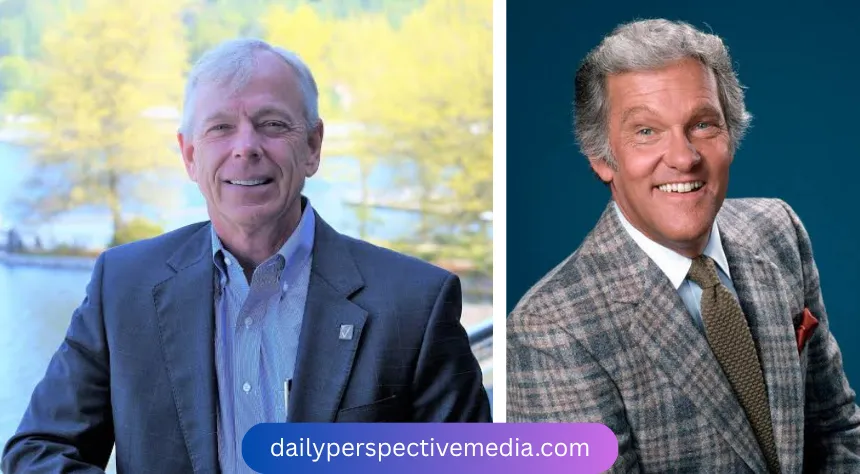
Lowell McAdam and Tom Kennedy built influential careers by turning technical knowledge into corporate leadership. McAdam became chairman and chief executive officer of Verizon Communications, while Kennedy, formally Thomas A. Kennedy, led Raytheon Company before serving as executive chairman of Raytheon Technologies. Their stories connect engineering education, military service, and responsibility for complex technology businesses. This biography compares their documented career paths rather than suggesting that they were business partners. It also distinguishes their former executive positions from later developments. For readers interested in how engineers become senior leaders, their careers offer useful examples of professional growth, major strategic decisions, and the lasting responsibilities of leadership.
Lowell McAdam Education and Military Service
McAdam earned an engineering degree from Cornell University and an MBA from the University of San Diego. He also spent six years in the United States Navy Civil Engineer Corps and became a licensed professional engineer in 1979. These qualifications combined technical training with business education and practical service experience. Engineering teaches people to examine how systems work, while an MBA introduces broader questions about finance and management. His later career required both kinds of thinking. Comparing Lowell McAdam and Tom Kennedy shows that their education was more than a background detail: it prepared each man for industries where technical decisions carry financial consequences and affect customers.
McAdam Early Career in Telecommunications
Before his most familiar Verizon positions, McAdam worked at Pacific Bell and later AirTouch Communications, which he joined in 1993. His AirTouch responsibilities included international operations and work involving cellular ventures across several countries. He subsequently became president and CEO of PrimeCo Personal Communications, a wireless joint venture, before joining Verizon Wireless at its formation in 2000. This progression placed him inside the mobile industry during an important period of expansion. His experience involved building and operating communications businesses rather than simply studying their markets. That foundation helps explain why his eventual leadership was closely associated with networks, infrastructure, and the practical demands of wireless service.
From Verizon Wireless to Verizon Chief Executive
Lowell McAdam served as Verizon Wireless president and CEO from 2007 to 2010, following earlier service as its executive vice president and chief operating officer. He became president and COO of the parent company in 2010, with responsibilities spanning its wireless and wireline businesses. On August 1, 2011, he became Verizon Communications CEO, followed by appointment as chairman on January 1, 2012. The distinction between Verizon Wireless and its parent is important because the roles involved different levels of responsibility. His advancement reflects a move from managing a major operating business to setting direction for the wider corporation, including its investments, portfolio, and leadership priorities.

The Verizon Wireless Deal Under McAdam
One of McAdam’s defining decisions was Verizon’s purchase of Vodafone’s 45 percent interest in Verizon Wireless. The transaction, valued at approximately $130 billion, completed in February 2014 and gave Verizon full ownership of the wireless business. This was an ownership transaction involving an established operation, rather than the creation of a new mobile company. Its importance lay in bringing the business entirely under Verizon’s control and consolidating its economic interests. For readers comparing Lowell McAdam and Tom Kennedy, the deal illustrates the scale of responsibility associated with a large technology company. Strategic leadership includes deciding how much control is worth and how major transactions fit longer-term priorities.
Network Investment and the Digital Media Strategy
Verizon’s 2018 succession announcement credited McAdam’s tenure with more than $120 billion in capital investment since 2011, alongside spectrum purchases and other initiatives. His strategy also included acquisitions involving AOL, Yahoo, and XO Communications, extending beyond the core wireless business. The record deserves a balanced reading: network investment and expansion into digital media were different strategic choices with different outcomes. In May 2021, after McAdam’s CEO tenure, Verizon announced an agreement for Apollo funds to acquire Verizon Media in a $5 billion transaction. That later decision provides context for the media strategy without making McAdam responsible for decisions taken by subsequent leadership.
Tom Kennedy Early Life and Engineering Education
Tom Kennedy grew up in Trenton, New Jersey, according to his Rutgers alumni interview. An Air Force scholarship helped shape his choice of an engineering education at a university with an ROTC program. He graduated from Rutgers University in 1977 with a bachelor’s degree in electrical engineering, then earned a master’s degree at the Air Force Institute of Technology and a doctorate in engineering at UCLA. These studies gave him a strong technical foundation before he reached senior management. Within the Lowell McAdam and Tom Kennedy comparison, Kennedy’s academic path stands out for its depth in engineering, especially the advanced education relevant to sophisticated electronics and defense technology.
Kennedy Military Service and Raytheon Beginnings
Before joining Raytheon, Kennedy served in the United States Air Force, reaching the rank of captain. His work included responsibility for satellite launch vehicle avionics development and production programs. He joined Raytheon in 1983, beginning in radar engineering. That starting point matters because his later leadership grew from direct involvement in the company’s technical work. Radar and avionics require attention to performance, integration, reliability, and customer requirements. Moving from military programs into industrial engineering also gave his career continuity around complex systems. His biography therefore offers a clear example of professional development built through successive responsibilities within a specialized field over many years.
Kennedy Rise Through Raytheon Management
Kennedy’s management career included leadership of Tactical Airborne Systems and Integrated Defense Systems, followed by appointment as Raytheon’s executive vice president and COO in 2013. Raytheon’s regulatory disclosures document this progression through increasingly broad responsibilities. His COO work included helping consolidate the company’s six businesses into four, an effort intended to improve its operations. Each promotion expanded the scope of decisions he had to make, from individual technologies to business units and then enterprise operations. Lowell McAdam and Tom Kennedy both reached senior leadership through operating experience, although Kennedy’s route remained particularly concentrated within Raytheon’s engineering and defense businesses over several decades.
Tom Kennedy as Raytheon Chairman and CEO
Tom Kennedy became Raytheon CEO in March 2014 and added the chairman’s role in October 2014. He had joined its board earlier that year. His responsibilities covered a company active in defense technologies, government systems, and cybersecurity. Raytheon’s disclosures describe his experience in engineering, operations, international markets, strategic planning, and risk management. These areas help explain the demands of the position without reducing the company’s achievements to one individual. Large defense programs depend on engineers, production teams, suppliers, customers, and public authorities working across long timelines. Kennedy’s role was to guide the organization and its priorities while overseeing that wider system of people, programs, and obligations.
The Merger and Both Leaders Retirement Timelines
In April 2020, Raytheon Company combined with United Technologies Corporation to form Raytheon Technologies, and Kennedy became executive chairman. He retired from that role and the board effective June 1, 2021. McAdam’s transition followed a different schedule: his Verizon CEO tenure ended on August 1, 2018, and his chairmanship ended on March 8, 2019. These dates prevent a common error in executive biographies, where old profiles continue to describe former leaders as current officeholders. Kennedy later joined Textron’s board in December 2022, a documented example of governance work after his Raytheon executive career. Retirement from one corporate office does not necessarily mean withdrawal from professional activity.
Lowell McAdam and Tom Kennedy Leadership and Legacy
A useful interpretation of Lowell McAdam and Tom Kennedy is that both built leadership careers around understanding technology and then managing organizations that delivered it. McAdam’s documented record includes wireless ownership and network investment; Kennedy’s includes engineering leadership and corporate integration. Their contributions also extend to education. Rutgers reports that Kennedy and his wife established the Thomas A. and Elaine M. Kennedy Endowed Scholarship, with a preference for women pursuing electrical engineering and cybersecurity. Historical biographies also record McAdam’s involvement with Cornell and education organizations. These activities add context to their professional legacies, while the strongest assessment of their leadership remains grounded in specific decisions rather than broad claims about personality.
Conclusion
Lowell McAdam and Tom Kennedy illustrate two routes from engineering and military service to major corporate leadership. McAdam’s career developed through telecommunications operations and culminated in leading Verizon during significant investment and ownership changes. Kennedy advanced through defense engineering and management before guiding Raytheon and helping oversee its transition into a combined company. Their biographies are most useful when readers keep the chronology, company names, and executive titles clear. Their experiences also suggest a practical lesson: technical knowledge can support leadership when it grows alongside financial judgment and organizational responsibility. A balanced account recognizes their achievements while leaving room to examine the outcomes of individual strategies over time.
Frequently Asked Questions
Who are Lowell McAdam and Tom Kennedy
Lowell McAdam is a former chairman and CEO of Verizon Communications, best known for his leadership in telecommunications. Tom Kennedy, formally Thomas A. Kennedy, is a former chairman and CEO of Raytheon Company who later became executive chairman of Raytheon Technologies. This article uses the name Tom Kennedy specifically for the defense industry executive. The comparison focuses on their careers, education, military service, and major leadership transitions. They worked in separate industries with different customers and operating requirements. Reading their biographies together is useful for understanding how technical professionals can advance into executive roles, but it does not establish that they had a personal relationship or joint venture.
What did Lowell McAdam achieve at Verizon
McAdam’s most prominent achievements include leading Verizon when it acquired full ownership of Verizon Wireless and overseeing substantial investment in communications infrastructure. The Vodafone transaction completed in 2014, while Verizon’s succession announcement also highlighted network spending, fiber assets, and other acquisitions during his leadership. Those decisions affected the company’s ownership structure and strategic direction. A fair assessment should also acknowledge that his expansion into media requires separate evaluation from the network business. Lowell McAdam and Tom Kennedy are both better understood through documented actions than through unqualified praise. No single transaction provides a complete measure of a chief executive’s performance or the work of a large organization.
What is Tom Kennedy best known for
Kennedy is best known for leading Raytheon Company as CEO from 2014 until the 2020 merger, alongside his service as chairman beginning later in 2014. His earlier career included radar engineering and leadership of major defense business units. Following the merger with United Technologies, he served as executive chairman of Raytheon Technologies until June 2021. This sequence explains why different historical profiles attach different company names and titles to him. Those descriptions refer to distinct stages of the same career. His engineering background is central to his biography because it preceded and informed a long progression into program management, business leadership, and corporate governance.
Did both executives serve in the military
Yes. McAdam served for six years in the U.S. Navy Civil Engineer Corps, while Kennedy served in the U.S. Air Force and attained the rank of captain. Their service involved different branches and professional responsibilities, so their military histories should be described separately. McAdam’s background connects to civil engineering, whereas Kennedy’s included work involving satellite launch vehicle avionics. Both later developed careers in civilian companies where technical systems and large projects were important. The Lowell McAdam and Tom Kennedy comparison therefore includes a documented shared experience of military service, although claims about precisely how that service shaped their personalities would require stronger personal evidence than their career summaries alone provide.
Are Lowell McAdam and Tom Kennedy still company CEOs
Neither man currently holds the CEO position described in this biography. McAdam left Verizon’s CEO role in August 2018, and Kennedy’s tenure as Raytheon Company CEO ended with the April 2020 merger. Their later chairmanship roles also ended, on the dates explained above. This distinction matters because university pages and archived corporate biographies sometimes retain titles that were accurate when originally published. A historical title should always be read together with its date. Readers checking an executive’s current responsibilities should consult recent company governance materials rather than assume an older biography remains current. The verified transitions provide the reliable foundation for describing these particular former leadership roles.
What can readers learn from their careers
The careers of Lowell McAdam and Tom Kennedy suggest that technical expertise becomes more valuable when paired with experience managing people, operations, and resources. Both advanced through roles that increased their responsibility before they reached the top of major corporations. Their stories also show why education can continue to matter throughout a career, whether through business study, advanced engineering, or practical learning at work. These are interpretations of their documented experience rather than guarantees of professional success. Readers can apply the lesson by developing their own expertise, seeking responsibilities that broaden their judgment, and examining major decisions carefully. Their biographies reward attention to steady professional development as well as headline achievements.