


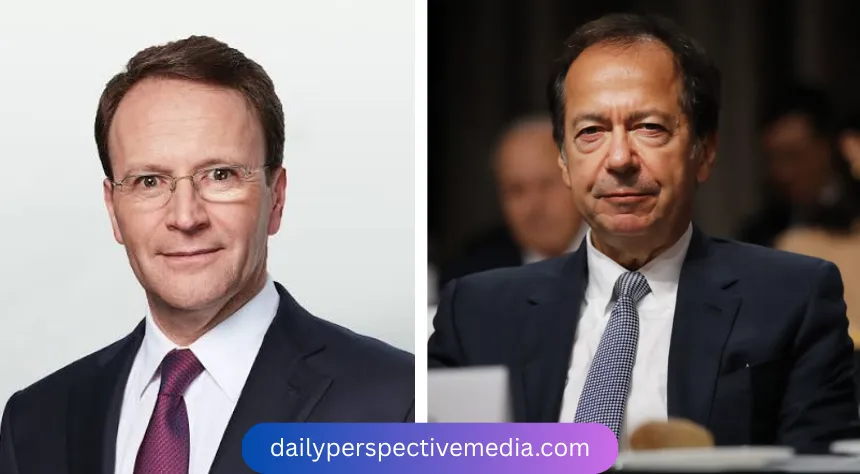
John Paulson and Ulf Mark Schneider built their reputations through different kinds of financial judgment. Paulson became internationally known for investment positions that benefited from the collapse of the American subprime mortgage market. Schneider, widely known professionally as Mark Schneider, developed his career by leading major healthcare and consumer goods companies. Their stories offer a useful comparison between investment management and corporate leadership. Both reached influential positions after years of education, professional training, and increasing responsibility. This biography examines their backgrounds, important decisions, career changes, and public contributions while distinguishing documented achievements from broader interpretations of their leadership.
John Paulson’s Early Life and Entrepreneurial Beginnings
John Paulson was born in Queens, New York, in 1955, according to Harvard Business School’s biographical timeline. His interest in commerce appeared well before his Wall Street career. As a young man, he pursued business opportunities in Ecuador, his father’s home country, including clothing production and importing goods. These experiences introduced him to the practical challenges of managing production, selling products, and handling growth. Harvard’s account describes how expanding responsibilities encouraged him to seek more formal training. His early career therefore began with direct business experience, giving his later financial education a practical foundation and a clear personal purpose.
Paulson’s Education and Early Finance Career
Paulson earned his undergraduate degree from New York University in 1978 and completed his MBA at Harvard Business School in 1980. His subsequent professional experience included consulting and investment roles before he established his own company. He worked at Boston Consulting Group and later developed his financial career at firms including Bear Stearns and Gruss Partners. These positions helped him build experience in corporate transactions and investment analysis. His progression also illustrates an important feature of his biography: the celebrated mortgage trade came after a substantial professional apprenticeship. By the time he founded an investment firm, he had already spent years studying companies and transactions.
Founding Paulson & Co. in 1994
John Paulson founded Paulson & Co. in 1994, creating the organization most closely associated with his professional identity. A published corporate biography describes its specialisms as global mergers, event arbitrage, and credit strategies. In simple terms, these approaches examine how company transactions, financial obligations, and particular events can affect investment values. Merger investing, for example, requires evaluating whether an announced transaction will close and what might prevent completion. This work depends on detailed research rather than a general prediction that markets will rise. Understanding the firm’s original focus helps explain Paulson’s analytical background before the housing-market position brought him much wider recognition.

The Mortgage Trade That Made Paulson Famous
The defining episode in Paulson’s career was his successful position against subprime mortgage-related investments in 2007. Such mortgages included loans to borrowers with weaker credit profiles, and securities linked to them became vulnerable as housing conditions deteriorated. Paulson’s investment approach benefited when those financial products lost value. Accounts of the trade describe the use of credit default swaps, contracts that can provide protection against specified credit problems. The achievement made his name a reference point in discussions of the financial crisis. Its central lesson concerns the ability to identify weaknesses in widely accepted assumptions, although executing such a position also involves substantial risk.
Paulson’s Transition to a Family Office
In 2020, Paulson announced that his firm would return outside investors’ capital and become a family office. This marked a significant change in its operating model. A family office generally manages wealth for an individual or family, whereas a fund accepting external clients also carries responsibilities toward those investors. The conversion did not mean that Paulson had stopped investing. It changed whose capital the organization principally managed. For readers following his biography, this distinction prevents confusion between leaving the investment profession and changing a firm’s structure. The transition belongs alongside the founding of Paulson & Co. as an important organizational milestone.
John Paulson’s Philanthropy and Public Contributions
John Paulson’s public legacy includes major charitable commitments alongside his investment career. In 2015, Harvard announced his $400 million endowment gift to its School of Engineering and Applied Sciences, which received his name. The university identified research, teaching, financial aid, and faculty development among the purposes supported. Separately, the Central Park Conservancy recorded a $100 million pledge from the Paulson Family Foundation in 2012, restricted to capital projects and long-term operating expenses. These contributions show two distinct areas of support: educational institutions and public space. They also provide concrete, documented examples of how private wealth can finance institutions serving wider communities.
Ulf Mark Schneider’s Background and Education
Ulf Mark Schneider was born in 1965 and holds German and American nationality, according to official corporate biographies. His education combined finance, accounting, academic research, and management training. He earned a finance and accounting degree at the University of St. Gallen in 1988, followed by a doctorate there in 1992. He then completed an MBA at Harvard Business School in 1993. These qualifications form an important part of his professional background, although his subsequent record also depended on operational experience. His biography is especially useful for understanding how financial training can develop into responsibility for large organizations across several industries and countries.
Schneider’s Early Career and Fresenius Leadership
Schneider worked within the Haniel Group from 1989 to 2001, holding positions involving finance, business development, and management. He then became chief financial officer of Fresenius Medical Care, before taking charge of the wider Fresenius Group in 2003. His leadership there established his reputation as a major corporate executive. When announcing his departure in 2016, Fresenius reported that group sales had increased fourfold and net income more than twelvefold during his tenure. These are company-reported measures of organizational growth, rather than personal financial gains. They provide useful context for the management experience he brought to his subsequent appointment at Nestlé.
Becoming Nestlé’s Chief Executive Officer
John Paulson and Ulf Mark Schneider became Nestlé’s chief executive officer in 2017, moving from healthcare into a global food and beverage company. His appointment placed him in charge of an organization with diverse products, markets, and consumer needs. The change also required applying financial and management experience to a different commercial environment. A consumer goods leader must consider brand strength, distribution, product development, manufacturing, and purchasing habits together. Schneider’s Nestlé years therefore expanded the scope of his professional story beyond healthcare. His career demonstrates how senior executives can move between industries while still facing the need to understand the specific operating conditions of their new organization.
Portfolio Changes and the Starbucks Agreement
During Schneider’s tenure, Nestlé undertook major transactions affecting its business portfolio. In 2018, it announced an agreement for the global marketing rights to specified Starbucks consumer and foodservice products, outside Starbucks coffee shops, involving an upfront payment of $7.15 billion. This was a licensing arrangement, rather than a purchase of Starbucks itself. Nestlé also agreed to sell its U.S. confectionery business to Ferrero for $2.8 billion that year. Viewed together, the transactions illustrate how management can redirect resources through both acquisitions or agreements and disposals. Their significance lies in the particular businesses and rights involved, rather than simply the headline transaction values.
Leaving Nestlé and Continuing Board Service
Nestlé announced Schneider’s departure on August 22, 2024, with Laurent Freixe’s appointment as CEO effective September 1, 2024. Schneider also relinquished his Nestlé board role. His professional activities subsequently included corporate oversight elsewhere. Roche lists him as a board member since 2023, while Siemens announced his election to its supervisory board in 2025. These positions should be distinguished from running a company as its chief executive. Board members oversee management and contribute to governance within their respective legal responsibilities. Schneider’s later career therefore adds another dimension to his biography: applying executive experience through board service after leaving a major operating leadership position.
John Paulson and Ulf Mark Schneider: Comparing Their Careers
A useful comparison of John Paulson and Ulf Mark Schneider begins with the decisions each profession requires. An investment manager evaluates assets, potential returns, and the possibility of loss. A chief executive allocates resources across an operating organization while managing execution through teams. Both roles require financial judgment, but their responsibilities and measures of success differ. Paulson’s mortgage position is a concentrated example of investment analysis producing an exceptional outcome. Schneider’s Fresenius tenure provides an example of organizational development over many years. Comparing these achievements offers more insight than placing personal wealth and company revenue side by side, since those figures describe fundamentally different things.
| Career feature | John Paulson | Ulf Mark Schneider |
|---|---|---|
| Best-known professional name | John Paulson | Mark Schneider |
| Main career field | Investment management | Corporate management |
| Major organization | Paulson & Co. | Fresenius and Nestlé |
| Notable milestone | Successful 2007 mortgage-related position | Led Fresenius, then Nestlé |
| Harvard MBA | 1980 | 1993 |
| Later transition | Family office conversion announced in 2020 | Board service after leaving Nestlé |
Conclusion
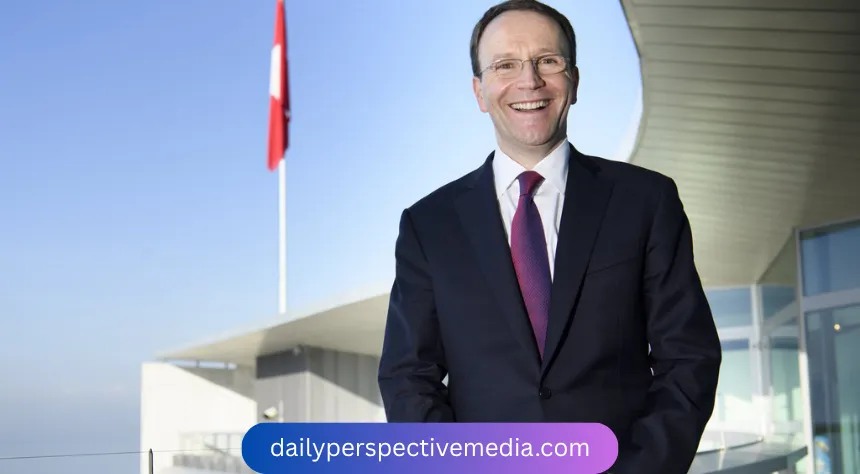
The biographies of John Paulson and Ulf Mark Schneider show how financial knowledge can support very different professional paths. Paulson’s story centers on investment judgment, entrepreneurship, and philanthropy. Schneider’s career follows a progression through finance, healthcare management, consumer goods leadership, and board responsibilities. Their achievements become clearer when examined within those separate contexts. Neither a celebrated trade nor a senior title captures an entire working life. Education, earlier experience, changing responsibilities, and institutional contributions all help complete the picture. For readers interested in influential professional careers, their stories offer a grounded comparison of how people make consequential decisions about capital, organizations, and long-term priorities.
What Is John Paulson Best Known For?
John Paulson is best known for his successful investment position against subprime mortgage-related securities in 2007. As problems spread through the American housing and credit markets, investments positioned to benefit from deterioration in mortgage credit gained value. This episode brought Paulson international attention and became central to his public reputation. However, it represents one chapter in a longer career that includes founding Paulson & Co., managing investments, and supporting charitable institutions. Readers should also distinguish his personal earnings from gains attributed to investment funds or their clients. Those figures measure different outcomes and should not be treated as interchangeable descriptions of the trade.
Are Ulf Mark Schneider and Mark Schneider the Same Person?
Yes. Ulf Mark Schneider and Mark Schneider refer to the same executive discussed in this biography. Fresenius used his fuller name in its leadership announcements, while Nestlé and Roche generally present him as Mark Schneider. This naming difference can make search results appear to describe separate people. His career history provides a straightforward way to confirm the identity: senior positions at Haniel, leadership roles at Fresenius, and the Nestlé CEO position from 2017 to 2024. When researching people with common surnames, checking their organizations and employment dates is more reliable than matching a shortened name alone across different articles or profile pages.
Did John Paulson and Ulf Mark Schneider Attend Harvard Together?
Both men earned MBAs from Harvard Business School, but their graduation years were different. Paulson completed his degree in 1980, while Schneider completed his in 1993. Their shared educational institution is a valid point of comparison, but those dates do not establish that they studied together. Similarly, attending the same school does not by itself demonstrate a personal friendship or professional partnership. A careful biography should keep those distinctions clear. Their educational records show a common institutional connection across different periods, followed by separate careers in investment management and corporate leadership. Any stronger claim about a relationship would require additional evidence beyond their qualifications.
Is Mark Schneider Still the CEO of Nestlé?
No. Mark Schneider’s tenure as Nestlé CEO ended in 2024. Nestlé announced the leadership change in August that year and named Laurent Freixe to take over effective September 1. Older articles may still describe Schneider as the company’s current chief executive because they were written during his tenure. Those descriptions need their original publication dates to remain accurate. A current biography should identify him as a former Nestlé CEO and separately describe any verified subsequent appointments. Official profiles also document his board service at Roche and his supervisory board membership at Siemens, providing relevant context for his activities after leaving Nestlé.
Are John Paulson and Ulf Mark Schneider Business Partners?
The sources used for this biography do not establish a direct business partnership between John Paulson and Ulf Mark Schneider. Their names appear together here because their careers offer an interesting comparison, rather than because a shared company or joint venture has been verified. Paulson is associated primarily with investment management, while Schneider’s career centers on executive leadership and corporate boards. It would be misleading to infer a working relationship merely from their financial backgrounds, Harvard qualifications, or prominence. A confirmed partnership would require specific evidence, such as an official transaction announcement, corporate filing, or documented joint appointment identifying both men and their respective roles.
How Should Their Wealth and Achievements Be Compared?
Personal wealth, investment gains, executive compensation, and company revenue are different measures. Paulson’s public profile includes billionaire wealth estimates, while Schneider’s professional record is more directly documented through executive appointments and corporate results. Comparing one person’s estimated assets with another’s employer’s sales would produce a misleading conclusion. Wealth estimates also depend on valuation dates and assumptions about assets and liabilities. A more useful comparison considers the responsibilities each man held and the outcomes associated with those responsibilities. For this biography, documented career milestones provide a stronger foundation than an unsupported claim about Schneider’s personal fortune or a permanently fixed estimate of Paulson’s net worth.