

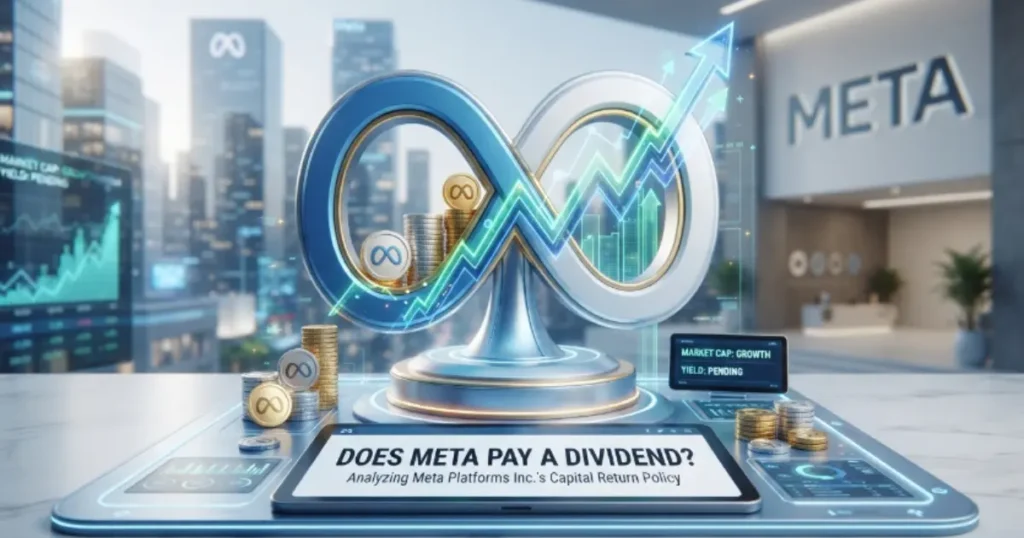
For years, one question dominated conversations among tech investors: does Meta pay a dividend? The answer used to be a simple no. Meta Platforms, the company built by Mark Zuckerberg, spent nearly two decades reinvesting every dollar into growth instead of rewarding shareholders directly. That changed in February 2024, when Meta shocked Wall Street by announcing its first-ever cash dividend. Today, in 2026, Meta continues to pay shareholders a steady quarterly amount while also pouring billions into artificial intelligence. This article explores Meta’s dividend history, its current payout, the story behind the decision, and what it means for long-term investors watching META stock.
Who Is Mark Zuckerberg and Why Does His Company Matter to Investors?
Mark Zuckerberg founded Facebook in 2004 from a Harvard dorm room, later rebranding the parent company as Meta Platforms in 2021 to reflect its ambitions beyond social media. As CEO, Zuckerberg has steered the company through explosive growth, regulatory scrutiny, and a costly pivot toward the metaverse and artificial intelligence. His decisions directly shape whether Meta rewards shareholders through dividends or reinvests cash into research and development. Understanding Zuckerberg’s leadership style helps explain why Meta waited so long to introduce dividends and why the payout, once launched, has remained deliberately modest compared to company profits.
Does Meta Pay a Dividend in 2026?
Yes. Meta offers a quarterly dividend of $0.525 per share, which totals $2.10 per year for shareholders. This confirms that Meta does pay a dividend, though it remains a relatively small return compared to the company’s overall earnings. The dividend applies equally to Class A and Class B common stock, meaning all shareholders of record receive the same per-share payment regardless of share class. For income-focused investors researching whether Meta belongs in a dividend portfolio, the current answer is straightforward: Meta pays, but it pays conservatively while prioritizing growth investments in AI infrastructure and product development.
Meta’s First-Ever Dividend Announcement in 2024
Meta’s decision to pay a dividend surprised many analysts. The company announced its first-ever quarterly dividend in February 2024, marking a major shift after Facebook went public in 2012 without ever offering shareholder payouts for over a decade. The announcement followed a dramatic turnaround year in which profits grew 69% to $39 billion in 2023. Zuckerberg called this period Meta’s “year of efficiency,” referencing an aggressive cost-cutting campaign. He stated, “Our communities are growing and our businesses are back on track,” signaling renewed confidence in Meta’s financial health and its ability to return cash to investors without slowing innovation.
The “Year of Efficiency” That Made Dividends Possible
Before dividends became reality, Meta underwent a painful restructuring known internally as the year of efficiency. This effort included laying off 21,000 employees, roughly 13% of its workforce, as the company trimmed costs across departments. The restructuring followed a rocky 2022, when heavy metaverse spending and slowing ad revenue rattled investor confidence. By cutting expenses and refocusing on core advertising and AI products, Meta rebuilt profitability quickly. This financial discipline created the surplus cash flow needed to justify a dividend, proving to shareholders that Meta could grow responsibly while also sharing profits directly with investors for the first time in company history.
Meta’s Current Dividend Payment Schedule
Meta pays dividends quarterly, following a predictable pattern throughout the year. On May 28, 2026, Meta’s board declared a quarterly cash dividend of $0.525 per share, payable on June 25, 2026, to shareholders of record as of June 15, 2026. A similar dividend was paid in March 2026, following the same $0.525 per-share structure. This consistency shows Meta has maintained its payout rate since introducing dividends, giving investors a reliable, if modest, income stream. Shareholders should track official announcements from Meta’s investor relations page for exact record and payment dates each quarter.
Understanding Meta’s Ex-Dividend Date
An important detail for investors is the ex-dividend date, which determines dividend eligibility. Meta’s most recent ex-dividend date was June 15, 2026, meaning investors who purchased shares on or after that date were not entitled to the June payment. Shareholders holding stock before the ex-dividend date received the $0.525 per share payout on June 25, 2026. Tracking ex-dividend dates matters for anyone building a dividend income strategy, since buying shares even one day late can mean missing an entire quarterly payment. Investors typically find these dates listed on financial platforms like Nasdaq, Koyfin, and Meta’s own investor relations website.
Meta’s Dividend Yield Explained
Meta’s 12-month dividend yield stood at approximately 0.32% to 0.35% in early July 2026, based on a share price near $603.12. Dividend yield measures the annual dividend relative to share price, giving investors a quick sense of income return. Compared to the S&P 500’s average 12-month dividend yield of 1.05% through July 2026, Meta’s yield is notably lower. This gap doesn’t necessarily signal weakness; rather, it reflects Meta’s strategy of prioritizing reinvestment over large cash distributions, a common approach among major technology companies still scaling aggressively in competitive markets like artificial intelligence.
How Meta’s Payout Ratio Compares to Other Companies
The payout ratio shows what percentage of earnings a company distributes as dividends. For 2025, Meta’s payout ratio was approximately 7.57% to 8.94%, depending on the calculation method used. By comparison, Home Depot’s 2025 payout ratio was 65%, while Alphabet’s payout ratio was around 7.68%. This low ratio indicates Meta retains the vast majority of its earnings for reinvestment rather than shareholder payouts. A low payout ratio is often seen as a sign of financial strength, suggesting Meta can comfortably sustain its dividend while still funding expensive AI and infrastructure projects without financial strain.
Meta vs. Alphabet: A Dividend Comparison
Since both companies operate in similar spaces, comparing Meta and Alphabet’s dividend policies offers useful context. Alphabet’s dividend yield was 0.24%, slightly lower than Meta’s yield of roughly 0.32% to 0.35%. Both companies began paying dividends relatively recently and maintain conservative payout ratios below 10%. This pattern reflects a broader trend among “Magnificent Seven” tech giants: rather than following traditional dividend-aristocrat strategies, they distribute small, symbolic dividends while funneling the bulk of profits into research, acquisitions, and infrastructure, particularly around artificial intelligence development, which both companies consider central to future growth.
Why Meta Combines Dividends With Stock Buybacks
Meta doesn’t rely on dividends alone to return value to shareholders. The company regularly spends tens of billions of dollars repurchasing its own stock, a strategy that can boost per-share value over time if earnings continue growing. Combining buybacks with quarterly dividends gives Meta flexibility: buybacks can be scaled up or down based on market conditions, while dividends offer a steady, predictable payment. This dual approach lets Meta reward long-term shareholders without locking itself into rigid dividend commitments that could become difficult to sustain during periods of heavy capital spending on data centers and AI research.
Meta’s Historical Reluctance to Pay Dividends
For most of its public history, Meta avoided dividends entirely. Facebook’s 2012 IPO ushered in a decade where the company reinvested profits into acquisitions like Instagram (2012) and WhatsApp (2014), along with heavy infrastructure spending. Tech companies historically favored this reinvestment model, arguing that growth-stage businesses generate better shareholder returns through expansion rather than direct payouts. Only after Meta matured into a highly profitable, cash-generating business did leadership feel comfortable introducing dividends. This 12-year gap between IPO and first dividend illustrates how differently mature tech giants approach shareholder returns compared to traditional dividend-paying industries like utilities or consumer staples.
What Triggered Meta’s Shift in Dividend Policy?
Several factors pushed Meta toward its 2024 dividend decision. Strengthening ad revenue, disciplined cost management, and improved profit margins created a cash surplus beyond what internal projects required. Additionally, investor pressure following 2022’s stock decline likely influenced the decision, as shareholders wanted clearer signals of financial discipline after heavy, unprofitable metaverse investments. By initiating a dividend, Meta signaled confidence in sustainable profitability rather than speculative spending alone. This move also positioned Meta alongside other mature tech companies that pay modest dividends, helping attract a broader investor base, including income-focused funds that previously avoided Meta stock.
Meta’s Dividend Growth Since 2024
Since launching its dividend, Meta has increased its payout at least once, moving from an initial rate to the current $0.525 per share figure. Some tracking platforms note Meta has raised dividends for one year consecutively, a modest but meaningful signal of commitment to shareholder returns. While one year of increases doesn’t make Meta a “dividend aristocrat,” it demonstrates leadership’s willingness to grow payouts alongside earnings. Investors watching for future increases should monitor quarterly earnings reports and board announcements, as continued profit growth in AI-driven advertising and Reality Labs products could support further dividend increases going forward.
What Does Meta’s Dividend Mean for Long-Term Investors?
For long-term investors, Meta’s dividend adds a layer of stability without sacrificing growth potential. While the 0.32% to 0.35% yield won’t attract pure income investors seeking high payouts, it complements Meta’s strong buyback program and continued earnings growth. Investors who already hold META stock for its advertising dominance, AI investments, and social media reach now receive a small additional cash return each quarter. Combined with share price appreciation potential, the dividend represents one part of a broader total-return strategy rather than the primary reason to invest in Meta Platforms.
How to Track Meta’s Dividend Payments
Investors can monitor Meta’s dividend schedule through several reliable sources, including Meta’s official investor relations website, financial data platforms like Nasdaq and Koyfin, and brokerage account dividend calendars. Key dates to track include the declaration date (when the board announces the dividend), the ex-dividend date (the cutoff for eligibility), the record date (when shareholder status is confirmed), and the payment date (when cash actually arrives). Setting up alerts through a brokerage platform ensures investors never miss important dividend dates, particularly useful for those relying on Meta’s quarterly payout as part of a broader income strategy.
Meta’s Broader Financial Strategy Under Zuckerberg
Beyond dividends, Zuckerberg’s broader strategy centers on balancing shareholder returns with massive investment in artificial intelligence infrastructure. Meta continues pouring billions into data centers, custom AI chips, and research talent, even while maintaining its dividend and buyback programs. This balancing act reflects Zuckerberg’s belief that AI represents the next major growth frontier for Meta’s advertising business and future products. Shareholders benefit from this dual strategy: steady quarterly income alongside exposure to Meta’s long-term AI ambitions, positioning the company as both a value and growth opportunity within the technology sector.
Risks and Considerations Before Investing for Meta’s Dividend
While Meta’s dividend is currently stable, investors should consider certain risks. Meta’s low payout ratio offers cushion, but heavy spending on AI infrastructure could eventually pressure future dividend growth if returns on those investments disappoint. Additionally, regulatory challenges, advertising market shifts, or competitive pressures from rivals could affect profitability. Investors should never choose Meta stock solely for its dividend yield, given how modest it remains compared to traditional dividend-focused sectors. Instead, the dividend should be viewed as a supplementary benefit within a broader investment thesis centered on Meta’s core advertising business and AI growth potential.
Conclusion
So, does Meta pay a dividend? Yes; since February 2024, Meta Platforms has paid shareholders a quarterly dividend currently set at $0.525 per share, totaling $2.10 annually. Under Mark Zuckerberg’s leadership, the company transformed from a growth-only reinvestment model into one that balances shareholder payouts, aggressive stock buybacks, and continued investment in artificial intelligence. While Meta’s dividend yield remains modest compared to the broader market, its low payout ratio and strong profitability suggest room for future increases. For investors, Meta’s dividend represents a welcome addition to an already compelling growth story, rather than the primary reason to hold the stock.
Frequently Asked Questions
1. Does Meta pay a dividend? Yes, Meta pays a quarterly dividend of $0.525 per share, totaling $2.10 annually, as of 2026.
2. When did Meta start paying dividends? Meta announced its first-ever dividend in February 2024, over a decade after its 2012 IPO.
3. What is Meta’s current dividend yield? Meta’s dividend yield is approximately 0.32% to 0.35%, based on mid-2026 share prices.
4. How often does Meta pay dividends? Meta pays dividends quarterly, typically in March, June, September, and December.
5. What is Meta’s dividend payout ratio? Meta’s payout ratio is roughly 7.57% to 8.94%, indicating a conservative approach to shareholder distributions.
6. Does Meta also buy back stock? Yes, Meta combines dividends with substantial stock buybacks, spending tens of billions annually repurchasing shares.
7. Is Meta a good stock for dividend investors? Meta suits investors seeking modest income alongside growth exposure, though its yield is lower than traditional dividend-focused stocks.