


When a child requires mobility assistance, selecting the right tool represents just the beginning of a longer journey. As children develop physically and cognitively, their needs change dramatically from year to year. The equipment that serves a three-year-old effectively may become inadequate by age six or seven. Manufacturers and healthcare professionals increasingly recognize that static solutions fail to meet the evolving demands of growing children. This shift toward adaptive design reflects a deeper understanding of pediatric development and the practical realities families face when managing long-term mobility support.
Understanding the Growth Challenges in Pediatric Mobility
Children experience rapid physical changes that directly impact their mobility requirements. Height, weight, strength, and coordination all develop at individual rates, meaning that equipment sized for one child’s current stage may quickly become inappropriate. Traditional mobility tools were often designed as fixed solutions, purchased at a specific point in time and replaced entirely when outgrown. This approach created financial burdens for families and generated unnecessary waste. Modern pediatric mobility support tools now incorporate design principles that anticipate these changes, allowing adjustments and modifications without requiring complete replacement. By building flexibility into the original design, manufacturers reduce both costs and the disruption caused by frequent equipment transitions.
Adjustable Components and Modular Design Systems
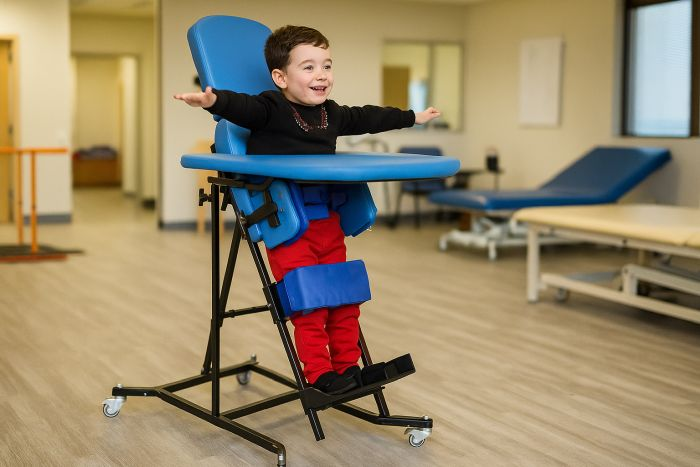
Contemporary pediatric mobility devices increasingly feature adjustable components that accommodate growth without sacrificing performance or safety. Handlebars, seat heights, and footrest positions can often be modified as the child develops, extending the usable lifespan of a single device by several years. Many devices now incorporate telescoping frames that lengthen proportionally with the child’s increasing height. Wheel sizes, support padding, and strap systems can be upgraded or replaced individually rather than requiring purchase of an entirely new unit. During gait training activities, for example, a dynamic gait trainer enables therapists to modify trunk supports, arm prompts, and hip positioners as the child progresses physically, ensuring the device remains clinically appropriate across multiple stages of development. This modular approach allows caregivers to customize equipment to match the child’s current measurements and capabilities, representing a significant advancement in how the industry addresses the practical realities of pediatric care over extended timeframes.
Material Selection and Durability for Long-Term Use
The materials used in pediatric mobility support tools directly influence how well equipment adapts to extended use and growth. Manufacturers now prioritize materials that remain functional and safe even after years of regular use and multiple adjustments. Lightweight aluminum and reinforced polymers provide strength without excessive weight, allowing children to maintain independence while supporting heavier loads as they grow. Hardware components are designed to withstand repeated adjustments without degrading or becoming loose. Padding and support surfaces use materials that maintain their effectiveness after compression and use, preventing the deterioration that can occur with older equipment. Additionally, durable materials reduce the frequency of repairs and maintenance, making devices more reliable throughout the child’s development.
Integration of Assistive Technology and Smart Features
Newer pediatric mobility support tools increasingly incorporate technology that adapts alongside physical development. Some devices now include sensors or monitoring systems that track usage patterns and provide feedback to healthcare providers about how well the equipment serves the child’s needs. Adjustable electronic features can be reprogrammed as the child’s physical capabilities change, without requiring hardware modifications. Voice-activated controls and responsive feedback systems can be customized to match changing cognitive and physical abilities. This integration of technology allows equipment to become more personalized and responsive to individual development trajectories. The combination of physical adjustability and digital adaptation creates support systems that grow with the child rather than simply accommodating size changes.
Customization Options and Personalized Fit
Recognizing that each child develops uniquely, manufacturers now offer increased customization options during both initial selection and throughout ongoing use. Children with different body proportions, strength levels, and mobility challenges require different configurations of the same base device. Modular attachment systems allow caregivers to add or remove support components based on current needs rather than purchasing devices designed for average measurements. Color options, pattern choices, and personalization features also help children feel ownership of their equipment and maintain psychological comfort as they grow. Professional fitting services work with families to establish the optimal initial configuration and provide guidance on future adjustments. This personalized approach acknowledges that pediatric mobility support must account for individual variation rather than relying on standardized solutions.
Collaboration Between Healthcare Providers and Design Teams
The evolution toward adaptive pediatric mobility support tools reflects increased collaboration between occupational therapists, physical therapists, and design professionals. Healthcare providers who work directly with children identify specific challenges and limitations in current equipment, supplying valuable feedback to manufacturers. This partnership ensures that design innovations address real-world needs rather than theoretical considerations alone. Design teams work with clinicians to create devices that maintain clinical effectiveness even as adjustments are made over time. Children with disabilities benefit most when their care involves coordinated, ongoing support that responds to their changing needs, a principle that directly informs how equipment manufacturers now approach adaptive design. This collaborative model has proven more effective at creating truly functional equipment than isolated design processes that lack direct clinical input.
Conclusion
Pediatric mobility support tools continue to evolve as designers recognize the inherent mismatch between static equipment and growing children. By incorporating adjustable components, durable materials, smart features, and customization options, modern devices adapt to the physical and cognitive changes that characterize childhood development. This approach reduces financial burden on families, minimizes waste, and ensures that children receive appropriate support throughout their development. The shift toward adaptive design represents a fundamental change in how the industry thinks about pediatric care. As this design philosophy continues to advance, children and their families benefit from equipment that truly grows alongside them rather than becoming obsolete within months or years.