


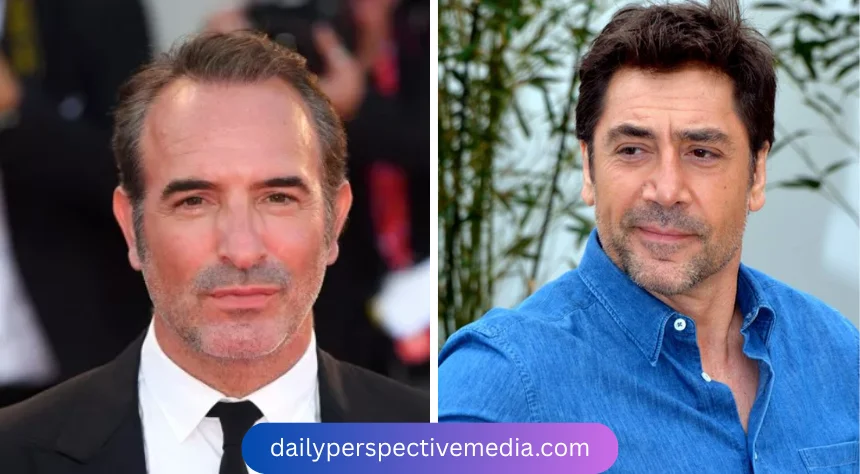
Few actors have crossed borders as convincingly as Javier Bardem of Spain and Jean Dujardin of France. Although they have never shared a film, Javier Bardem and Jean Dujardin are often mentioned together because each broke new ground at the Academy Awards: Bardem became the first Spanish actor to win an Oscar in 2008, and Dujardin became the first Frenchman to win Best Actor in 2012. This biography follows both careers, from childhood and early training to breakout roles, global fame and personal lives. Whether you know them as the chilling killer of No Country for Old Men or the charming silent-film star of The Artist, their stories reward a closer look.
Javier Bardem and Jean Dujardin at a Glance
Here is a quick overview of Javier Bardem and Jean Dujardin. Javier Bardem was born on 1 March 1969 in Las Palmas de Gran Canaria, Spain, and he is best known for No Country for Old Men, Skyfall and the Dune films. Jean Dujardin was born on 19 June 1972 in Rueil-Malmaison, France, and he rose to fame through OSS 117 and The Artist. Bardem has earned four Oscar nominations and one win, while Dujardin took home the Best Actor statuette on his first nomination. Bardem has been married to actress Penélope Cruz since 2010. Both men have worked with legendary directors, and both remain active in cinema today.
Javier Bardem: Early Life and Family Roots
Javier Ángel Encinas Bardem grew up in a family devoted to Spanish performing arts. His mother, Pilar Bardem, was a celebrated actress, and his uncle Javier Bardem and Jean Dujardin was a respected director whose films challenged censorship under Franco. His grandparents, Rafael Bardem and Matilde Muñoz Sampedro, were also actors, and his brother Carlos Bardem and sister Mónica followed creative paths too. Born in the Canary Islands, he grew up largely in Madrid and appeared on screen for the first time in 1974 in the television series El pícaro. Even so, acting did not feel like an obvious destiny to him as a teenager, and his early interests pointed elsewhere.
From Rugby Pitch to Painting Studio
As a teenager, Bardem showed more enthusiasm for sport and art than for the stage. He played rugby at a high level and was selected for Spain’s national junior team, an experience that shaped the physical presence audiences would later admire on screen. He also studied painting at the Escuela de Artes y Oficios in Madrid, and he took small roles in film and television while still finding his path. Acting finally became his main focus in his early twenties. Directors noticed his imposing build, expressive face and willingness to disappear into a part. That mix of athleticism and sensitivity became his trademark and set him apart from the conventional leading men of Spanish cinema in the early 1990s.
Breakthrough in Spanish Cinema
Bardem’s breakthrough came with Bigas Luna’s Jamón, Jamón (1992), a sensual, darkly comic drama that also introduced Penélope Cruz to wide audiences. He followed it with Golden Balls (1993) and a run of Spanish films that built his reputation at home. Then came the international turning point: Julian Schnabel’s Before Night Falls (2000), in which he played the exiled Cuban writer Reinaldo Arenas. The performance earned him an Oscar nomination for Best Actor, the first ever for a Spanish actor. Back in Spain he won a Goya Award for Mondays in the Sun (2002), and he gave one of his most moving performances in Alejandro Amenábar’s The Sea Inside (2004).
Javier Bardem’s Hollywood Rise
By the late 1990s, Bardem’s reputation had spread well beyond Spain. He worked with director Pedro Almodóvar on Live Flesh (1997), and the acclaim for Before Night Falls opened doors in the United States. He took English-language roles in films such as The Dancer Upstairs (2002) and Collateral (2004), choosing projects with strong directors rather than easy fame. Spanish audiences continued to see him in local dramas, which kept his career balanced between two industries. This careful approach, built on trust in filmmakers, helped him move into Hollywood without losing the artistic credibility that had made critics notice him in the first place.
No Country for Old Men and the Oscar
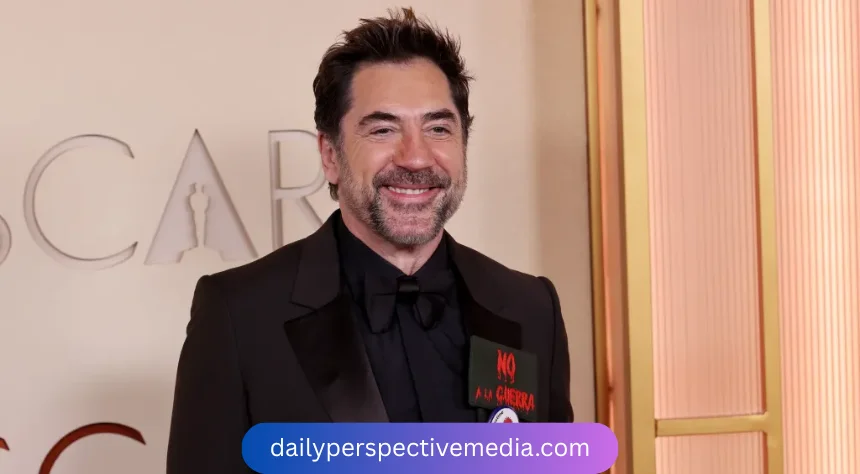
In 2007, the Coen brothers cast Bardem as Anton Chigurh, the relentless hitman of No Country for Old Men, armed with a captive-bolt pistol and a deadly sense of fate. The performance, defined by stillness and an unforgettable haircut, turned him into one of modern cinema’s great villains. At the ceremony in February 2008 he won the Academy Award for Best Supporting Actor, and he also collected the Golden Globe, BAFTA and Screen Actors Guild awards. He became the first Spanish actor to win an Oscar. On stage, he paid tribute to his mother, Pilar Bardem, and to Spanish cinema, which made the win feel like a shared celebration at home.
Blockbusters and Recent Roles
Since then, Bardem has balanced prestige and spectacle. He played the villain Raoul Silva in Skyfall (2012) and Captain Salazar in Pirates of the Caribbean: Dead Men Tell No Tales (2017). Meanwhile, Biutiful (2010) earned him a third Oscar nomination and the Best Actor prize at Cannes, shared with Elio Germano, and Being the Ricardos (2021) brought a fourth nomination for his turn as Desi Arnaz. He won another Goya for The Good Boss (2021), played Stilgar in the Dune films, voiced King Triton in The Little Mermaid (2023), and portrayed José Menendez in Monsters (2024). He is also expected back as Stilgar in Dune: Part Three, due in December 2026.
Jean Dujardin: Early Life and Comedy Beginnings
Jean Edmond Dujardin was born on 19 June 1972 in Rueil-Malmaison, near Paris, and grew up in nearby Le Vésinet. Unlike Bardem, he did not come from an acting dynasty. From his teenage years he enjoyed making people laugh, and he began performing in cabaret venues and comedy troupes in the early 1990s, sharpening the timing that later defined his screen persona. He spent years in small venues and sketch shows before television gave him a wider audience. This long apprenticeship in live comedy taught him rhythm, mimicry and the confidence to play absurd characters with total conviction, skills that would prove priceless later.
From Un gars, une fille to Stardom
Dujardin’s national fame arrived with the sitcom Un gars, une fille (1999–2003), in which he starred opposite Alexandra Lamy as half of a bickering Parisian couple. The short, improvised-feeling episodes made both actors household names in France. He then moved to cinema with comedy hits, most notably the cult favourite Brice de Nice (2005), in which he played an overconfident surfer waiting for the perfect wave. These roles established him as one of France’s most bankable comic actors, although critics still saw him mainly as a funnyman. That reputation made his later pivot to serious drama and international cinema even more striking.
OSS 117 and The Artist: Dujardin’s Breakthrough
Everything changed when director Michel Hazanavicius cast him in OSS 117: Cairo, Nest of Spies (2006), a sharp parody of 1960s spy films, followed by Lost in Rio (2009). Dujardin’s hero, Hubert Bonisseur de La Bath, was charming, clueless and endlessly quotable. The pair then made The Artist (2011), a black-and-white silent film in which Dujardin played fading star George Valentin. He won Best Actor at Cannes in May 2011, then the Golden Globe, BAFTA, César and, at the 84th Academy Awards in February 2012, the Oscar for Best Actor. The Artist also won Best Picture, and Dujardin became the first Frenchman to take the lead-actor prize.
Jean Dujardin’s International and French Film Career
After The Artist, Dujardin tried Hollywood, appearing as a Swiss banker in Martin Scorsese’s The Wolf of Wall Street (2013) and alongside George Clooney in The Monuments Men (2014). He then returned to French cinema and played a determined magistrate in the crime drama The Connection (2014), opposite Gilles Lellouche. He took on a serious historical role as Colonel Georges Picquart in Roman Polanski’s An Officer and a Spy (2019), and showed his taste for the strange in Quentin Dupieux’s Deerskin (2019). More recent credits include OSS 117: From Africa with Love (2021), which brought his famous spy back, and the thriller Novembre (2022).
What Javier Bardem and Jean Dujardin Have in Common
Although they come from different countries and traditions, Javier Bardem and Jean Dujardin share a surprising number of milestones. Each won the Best Actor prize at Cannes within a year of the other, Bardem in 2010 and Dujardin in 2011, and each won an Oscar within four years, in 2008 and 2012. Both became famous at home before conquering international audiences, and neither abandoned native-language cinema afterward. They have worked with directors of the highest calibre, from the Coens and Woody Allen to Scorsese and Polanski. Most importantly, both proved that an actor who does not work primarily in English can still reach the top of world cinema.
Contrasting Styles and Screen Personas
Their screen personas could hardly differ more. Bardem is known for brooding intensity, physical weight and an ability to play both monsters and martyrs, from Chigurh to Ramón Sampedro. Dujardin built his career on comic timing, expressive eyebrows and a knowing charm that recalls classic French stars, yet he has also surprised audiences with quieter dramatic work. Bardem has spent more of his career in English-language productions, while Dujardin has remained closer to French cinema and its comedic traditions. Critics often describe Bardem as an actor of transformation and Dujardin as an actor of charisma. Together they show how different acting styles can earn the same global recognition.
Personal Lives of Bardem and Dujardin
Away from the screen, both men guard their privacy. Bardem married Penélope Cruz in a private ceremony in the Bahamas in July 2010, and the couple have two children, Leo (born 2011) and Luna (born 2013). They live largely in Madrid and rarely discuss family life in interviews. Dujardin was married to actress Alexandra Lamy from 2009, and the couple separated in 2013. He later began a relationship with former ice dancer Nathalie Péchalat. Both actors prefer to let their work speak, which has helped them remain respected figures rather than constant tabloid subjects, and it keeps the focus on their craft.
Awards and Honours Compared
Bardem’s shelf includes the Oscar for No Country for Old Men, a Golden Globe, a BAFTA, a Screen Actors Guild Award, the Cannes Best Actor prize and several Goya Awards, along with the Volpi Cup at Venice for The Sea Inside. In total he has four Oscar nominations, and in 2025 he received an Emmy nomination for Monsters. Dujardin won the Oscar, Golden Globe, BAFTA, César and Cannes Best Actor prize for The Artist, a rare sweep for a single performance. He has also been honoured by the French state with the Legion of Honour. Different in number, the two collections show comparable prestige.
Activism and Public Image
Bardem is outspoken. He has campaigned for the rights of the Sahrawi people of Western Sahara, supported the documentary Sons of the Clouds (2012), and joined environmental campaigns, including Greenpeace efforts to protect the Arctic. He has also spoken publicly about humanitarian crises, which has drawn both praise and criticism. Dujardin is far more reserved, rarely commenting on politics and preferring to speak through his films. These contrasting public images mean that fans see Bardem as a committed advocate and Dujardin as a modest, down-to-earth entertainer. Whichever approach one prefers, both have used their fame in ways that reflect their personalities.
Legacy and Influence on World Cinema
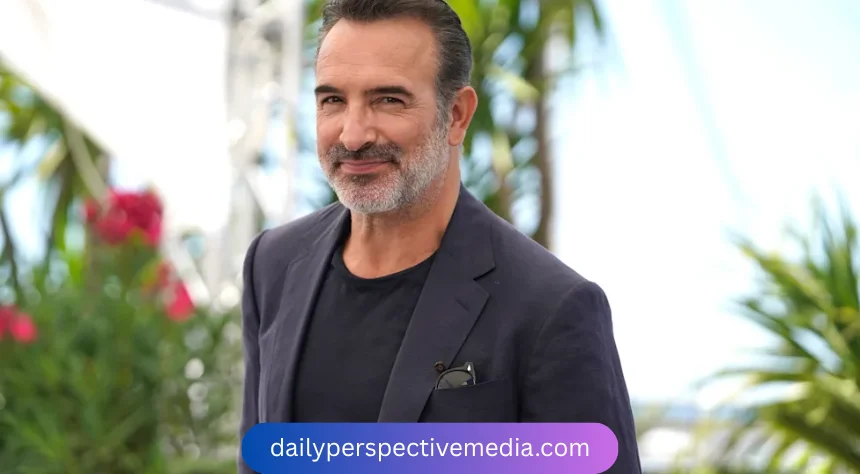
The influence of Javier Bardem and Jean Dujardin on world cinema is considerable. Bardem’s success inspired a generation of Spanish and Latin American actors to aim for international careers without giving up their roots. Dujardin’s win gave the French industry fresh confidence and revived interest in classic cinematic forms, since The Artist celebrated the silent era. Both continue to choose adventurous projects rather than easy paydays, which keeps their careers fresh and unpredictable. Their paths prove that talent grounded in a local culture can resonate everywhere, and that a single performance can change an actor’s life, and sometimes an entire national film industry.
Conclusion
In the end, Javier Bardem and Jean Dujardin offer two complementary models of screen success. Bardem, born in 1969 into a Spanish acting family, rose through intense dramatic roles to win an Oscar in 2008. Dujardin, born in 1972, rose from French comedy to win an Oscar in 2012. Neither has acted opposite the other, yet their careers mirror each other in prestige, ambition and respect for craft. With Dune: Part Three on the horizon for Bardem and Dujardin’s continuing work in French cinema, both stars remain relevant. Explore their films in order, and you will see why audiences everywhere still admire them.
FAQs
1. Have Javier Bardem and Jean Dujardin acted together? No. They are often compared because of their Oscar wins and Cannes awards, but they have not appeared in a film together.
2. Who won an Oscar first? Bardem won Best Supporting Actor in February 2008. Dujardin won Best Actor in February 2012.
3. How old are they? Bardem was born on 1 March 1969 and Dujardin on 19 June 1972, so they are 57 and 54 respectively as of October 2026.
4. Is Javier Bardem married to Penélope Cruz? Yes. They married in July 2010 and have two children, Leo and Luna.
5. What are their most famous films? For Bardem: No Country for Old Men, Skyfall, Biutiful and Dune. For Dujardin: The Artist, OSS 117 and An Officer and a Spy.
6. What is Javier Bardem working on next? He is expected to return as Stilgar in Dune: Part Three, scheduled for December 2026. Check official studio announcements for the latest details.
7. Which languages do they work in? Bardem works in Spanish and English, and Dujardin works mainly in French, with English-language roles in Hollywood films.