


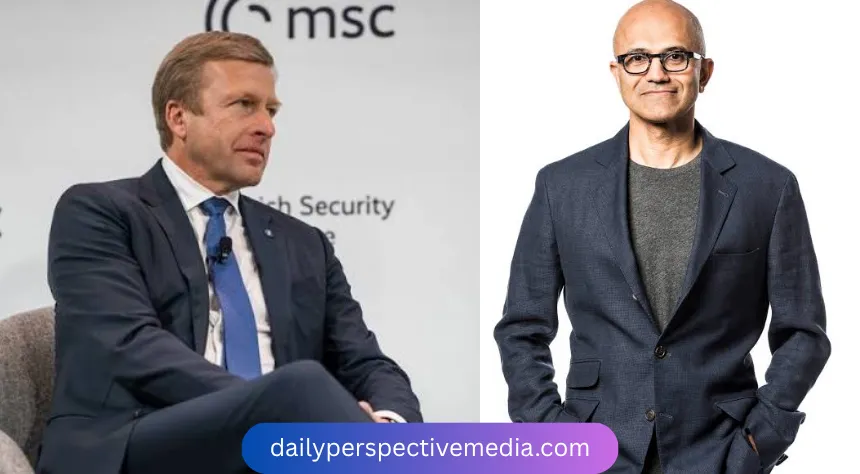
Oliver Zipse and Satya Nadella built their reputations by helping established companies respond to technological change. Zipse rose through BMW’s engineering and production operations before leading the German automotive group, while Nadella advanced through Microsoft’s software and enterprise businesses to become its chief executive. Their careers connect two increasingly related worlds: intelligent manufacturing and digital computing. This biography examines their education, professional milestones, leadership approaches, and the documented relationship between their companies. As of 28 October 2026, Zipse is BMW’s former chairman of the Board of Management, while Nadella remains Microsoft’s chairman and CEO. That distinction is essential when comparing their achievements and describing their current professional status.
Oliver Zipse Early Life and International Education
Born in 1964 in Heidelberg, Germany, Oliver Zipse developed an educational background that crossed national and technical boundaries. He studied computer science and mathematics at the University of Utah from 1983 to 1985, an experience the university highlighted when he returned to campus in 2024. He subsequently studied mechanical engineering at TU Darmstadt, completing his engineering qualification in 1991. His academic route helps explain why his later work sits comfortably between physical manufacturing and digital systems. For readers exploring executive biographies, the useful detail is the combination of disciplines: mathematics encourages structured reasoning, computing introduces systems thinking, and mechanical engineering connects those habits to products and production processes.
How Engineering Shaped Zipse Career
Zipse joined BMW in 1991, beginning a career that would span approximately 35 years with the company. His early professional development included work in engineering, production, and planning, with experience extending beyond Germany. University records describe assignments connected with Munich, South Africa, and the United Kingdom, illustrating the international character of his operational background. These responsibilities provide a practical foundation for understanding his later decisions. A vehicle manufacturer must coordinate design requirements, machinery, employees, suppliers, and delivery schedules before a finished car reaches a customer. Zipse’s progression placed him close to those connections, giving his executive career an operational grounding rather than a purely financial or marketing emphasis.
From Oxford Plant Management to the BMW Board
A significant stage in Oliver Zipse’s advancement was his role as managing director of BMW Group Plant Oxford during 2007 and 2008. The Oxford operation is closely associated with MINI production, making the assignment an important chapter in his manufacturing career. He later led technical planning from 2009 to 2012 and corporate planning from 2012 to 2015, before joining BMW’s Board of Management with responsibility for Production in 2015. These positions show a widening professional scope: first managing a plant, then shaping planning functions, and finally overseeing production at board level. His biography therefore offers a clear example of how detailed operational experience can develop into responsibility for an entire industrial organization.
Zipse BMW Chairmanship and the 2026 Handover
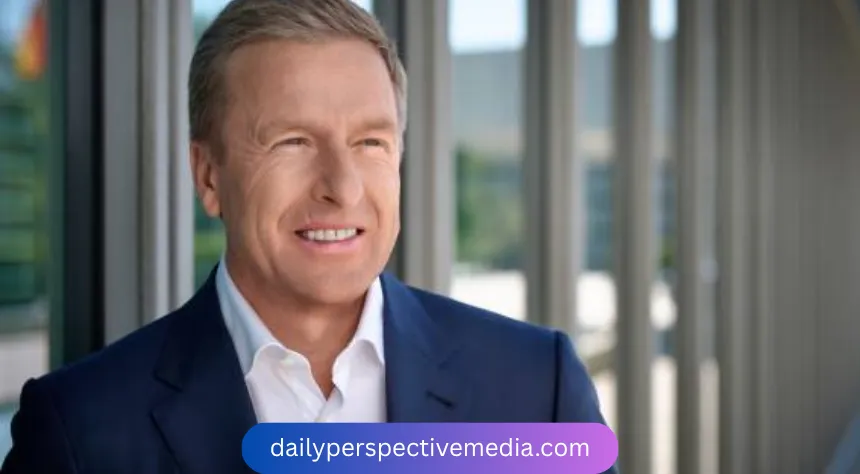
Zipse became chairman of BMW’s Board of Management in August 2019, taking charge shortly before the COVID-19 pandemic disrupted businesses worldwide. BMW’s subsequent assessment credits him with steering the group through that crisis and maintaining its strategic direction during a period of transformation. His tenure ended after the company’s annual general meeting on 13 May 2026, with Milan Nedeljković taking over on 14 May 2026. The departure had been announced in advance as a planned succession. Accounts of Oliver Zipse and Satya Nadella should therefore use their titles carefully: Zipse’s contribution is now evaluated as a completed BMW leadership tenure, while Nadella’s Microsoft leadership continues.
Electric Mobility and the Neue Klasse Strategy
The Neue Klasse became the defining strategic project associated with Zipse’s BMW chairmanship. BMW described it as a major renewal involving electric mobility and a broader transfer of new technologies across its vehicle range. Alongside electrification, Zipse supported a technology-open approach, offering different powertrain options to reflect varying customer needs and market conditions. The important distinction is that investment in battery electric vehicles did not require BMW to offer only one type of propulsion across every market. These choices illustrate the complexity of automotive transformation: manufacturers must develop future products while serving customers with different charging access, travel patterns, and purchasing priorities. BMW’s own farewell statement explicitly linked Zipse’s legacy to the Neue Klasse.
Satya Nadella Origins and Academic Background
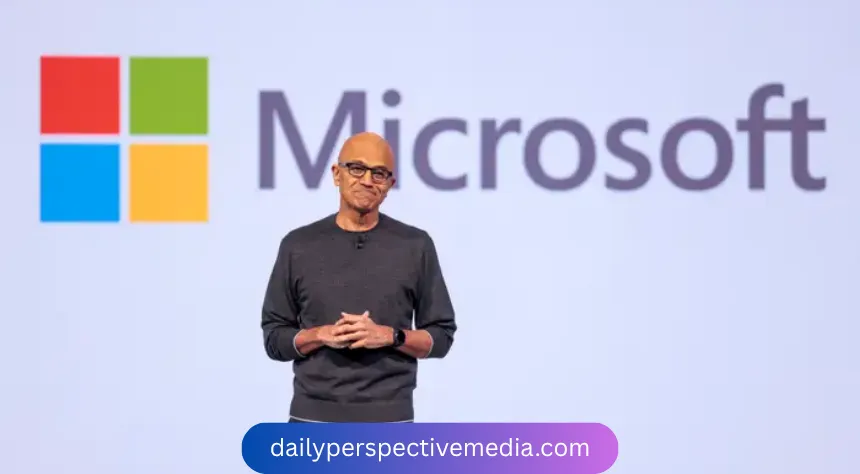
Satya Nadella comes from Hyderabad, India, and his education combined engineering, computing, and management. Microsoft’s official biography records a bachelor’s degree in electrical engineering from Mangalore University, a master’s degree in computer science from the University of Wisconsin–Milwaukee, and an MBA from the University of Chicago. Together, those qualifications provide a useful framework for understanding his professional development. Electrical engineering concerns the foundations of technological systems; computer science develops expertise in software and computation; business education adds organizational and commercial perspectives. When comparing Oliver Zipse and Satya Nadella, their shared technical foundations stand out, although Nadella’s later career concentrated on software platforms and enterprise services rather than vehicle production.
Joining Microsoft and Building Enterprise Experience
Before joining Microsoft, Nadella worked on the technology staff at Sun Microsystems. He entered Microsoft in 1992, beginning a long internal career across several businesses. His responsibilities eventually included leadership positions in online services, the Microsoft Business Division, and server technologies. He served as president of Server and Tools from 2011 to 2013, followed by the role of executive vice president of Cloud and Enterprise. This progression matters because it places his CEO appointment in context: he had already worked across the infrastructure, developer tools, and organizational relationships that support enterprise computing. His rise reflects sustained experience within Microsoft rather than an arrival from outside the company to direct its transformation.
Becoming Microsoft CEO and Advancing Cloud Computing
On 4 February 2014, Microsoft appointed Nadella as its chief executive and a member of its board. He became the company’s third CEO, following Bill Gates and Steve Ballmer. His background in Cloud and Enterprise made the appointment closely connected to Microsoft’s expanding infrastructure and services business. Microsoft’s official biography credits him with leading a cloud transformation before he became CEO, rather than beginning that work only after his promotion. In his first message to employees, he emphasized innovation, learning, and the need to keep changing. For a biography reader, this combination of technical responsibility and organizational ambition explains why cloud computing became central to public understanding of his leadership.
Empathy Growth Mindset and Hit Refresh
Satya Nadella’s leadership philosophy gives particular attention to empathy, continuous learning, and organizational culture. His 2017 book Hit Refresh connects personal experience with Microsoft’s efforts to renew itself and respond to emerging technologies. In a separate personal essay, he explained how family life, including his experience as a father, changed his understanding of disability and the needs of others. These reflections give a human dimension to his professional biography without requiring speculation about private matters. The practical leadership lesson is that understanding a customer’s difficulties can influence what a company chooses to build. Microsoft’s own accounts also connect empathy with accessibility and innovation, showing how a personal principle can inform product development and workplace expectations.
Nadella Current Role and the Artificial Intelligence Era
Nadella became chairman of Microsoft’s board in June 2021, adding that responsibility to his existing position as CEO. Microsoft’s 2026 annual report continues to identify him as chairman and chief executive officer. The report describes a business agenda shaped by artificial intelligence, cloud infrastructure, productivity tools, and security. These priorities place his ongoing leadership in a different technological moment from his initial CEO appointment in 2014. The challenge now includes making increasingly capable computing services useful to customers while addressing reliability, security, and organizational adoption. Evaluating Oliver Zipse and Satya Nadella requires this time perspective: a leader’s responsibilities evolve as technologies mature, markets change, and products become more deeply embedded in everyday work.
Oliver Zipse and Satya Nadella Through the BMW Microsoft Partnership
The connection between Oliver Zipse and Satya Nadella includes a documented relationship between their companies. On 2 April 2019, BMW and Microsoft announced the Open Manufacturing Platform, an initiative intended to support collaboration on industrial technology. The announcement described an approach built around Microsoft Azure, open industrial standards, shared components, and more accessible manufacturing data. Zipse, then BMW’s production board member, explained the importance of connecting production systems and securely involving partners and suppliers. However, the announcement should not be rewritten as evidence of a privately negotiated agreement between the two executives. Its stated significance was organizational: an automotive manufacturer and a technology provider were collaborating on problems that extended across the manufacturing industry.
Conclusion
The biographies of Oliver Zipse and Satya Nadella show how technical expertise can develop into leadership of complex international organizations. Zipse’s BMW career progressed through production and planning into a chairmanship associated with industrial transformation and the Neue Klasse. Nadella’s Microsoft career moved through enterprise technology into continuing responsibility for cloud computing, organizational renewal, and artificial intelligence. Their stories also reveal different leadership settings: cars require coordinated physical production, while software platforms must serve changing needs across many industries. Their companies’ manufacturing collaboration brings those settings together. The most useful lesson from both careers is the value of combining specialist knowledge with learning, collaboration, and decisions that connect technological ambition to practical customer needs.
Frequently Asked Questions
Who are Oliver Zipse and Satya Nadella
Oliver Zipse is the former chairman of BMW’s Board of Management, and Satya Nadella is Microsoft’s chairman and CEO. Both developed their careers through substantial technical and managerial experience within the organizations they eventually led. Zipse’s background centered on engineering, manufacturing, and corporate planning; Nadella’s included software, enterprise infrastructure, and cloud services. Their names appear together in discussions of digital transformation because manufacturing increasingly depends on sophisticated computing systems. A useful biography comparison examines their separate achievements and the documented collaboration between BMW and Microsoft. It should also preserve the distinction between leading an automotive manufacturer and leading a technology platform company, since those responsibilities involve different products and operating requirements.
Is Oliver Zipse still the CEO of BMW
No. Oliver Zipse concluded his BMW chairmanship on 13 May 2026. Milan Nedeljković became chairman of BMW’s Board of Management on 14 May 2026, following the succession announced by the company. Older biographies may still describe Zipse as the current BMW chief because they were written during his tenure or have not been revised. Readers should check the publication date and compare the information with BMW’s current leadership page. Zipse remains an important figure in BMW’s recent history, particularly in discussions of production strategy and the Neue Klasse, but historical influence does not mean he continues to hold the position. This article uses his former title consistently for that reason.
What did Oliver Zipse and Satya Nadella study
The academic backgrounds of Oliver Zipse and Satya Nadella share a strong technical foundation. Zipse studied computer science and mathematics at the University of Utah, then completed his mechanical engineering studies at TU Darmstadt. Nadella earned qualifications in electrical engineering, computer science, and business administration, according to Microsoft’s biography. Their education helps readers understand the kinds of problems they encountered professionally, although qualifications alone do not explain an entire leadership career. Zipse subsequently accumulated extensive manufacturing experience, while Nadella developed expertise across Microsoft’s enterprise and cloud businesses. The more revealing comparison combines academic training with the responsibilities each man held before reaching the top of his respective organization.
When did Satya Nadella become Microsoft CEO
Satya Nadella became Microsoft CEO on 4 February 2014, succeeding Steve Ballmer. Microsoft announced his appointment to both the chief executive role and the board on that date. He had joined the company in 1992, so his promotion followed more than two decades of internal experience. Before becoming CEO, he led the Cloud and Enterprise group, which makes enterprise computing a central part of his professional story. He later became board chairman in June 2021. These milestones describe different responsibilities and should be recorded separately in a reliable biography: the 2014 appointment established his executive leadership, while the 2021 appointment added the chairmanship of Microsoft’s board.
What is the connection between BMW and Microsoft
BMW and Microsoft have collaborated on manufacturing and digital technologies, including the Open Manufacturing Platform announced in 2019. The initiative addressed challenges such as disconnected industrial data and the difficulty of integrating different production systems. Microsoft’s Azure team also described an early BMW use case involving autonomous transport systems and more efficient factory logistics. This provides a concrete connection between automobile production and cloud technology: computing services can help coordinate the movement of materials inside a plant. Readers researching Oliver Zipse and Satya Nadella should describe this as a corporate technology relationship. Public announcements establish the companies’ collaboration, but they do not establish a private friendship or personal partnership between the executives.
What can readers learn from their leadership careers
The careers of Oliver Zipse and Satya Nadella suggest that leadership benefits from understanding both technical details and organizational behavior. Zipse’s progression shows how operational responsibility can build toward broader strategic decision-making. Nadella’s public reflections emphasize learning and empathy as part of organizational renewal. These are useful observations rather than a formula that guarantees success: different businesses face different customers, investment cycles, and competitive pressures. A student, engineer, or aspiring manager can still draw practical lessons from the comparison by building expertise, accepting wider responsibilities, and listening carefully to the people affected by decisions. Their biographies are most informative when achievements are explained through specific roles and documented choices instead of generalized claims about exceptional leadership