


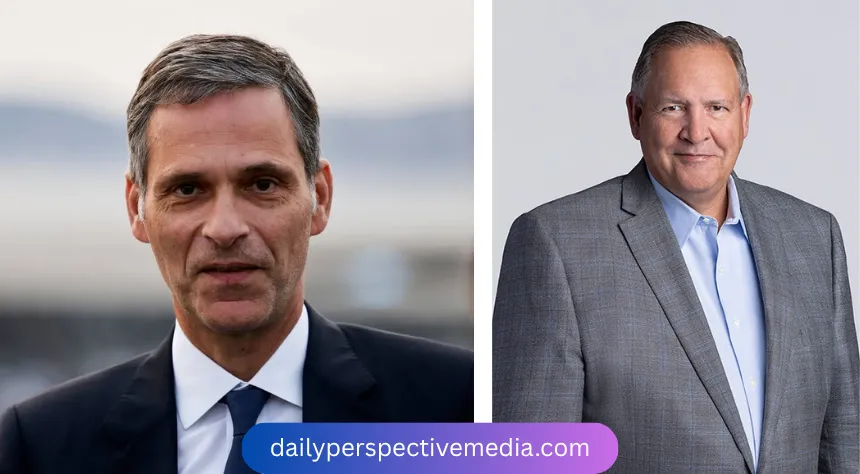
Rodolphe Saadé and Greg Hayes built their reputations in industries that support international trade, transportation, and economic security. Saadé leads CMA CGM, the shipping and logistics group associated with his family, while Hayes is known for his leadership of United Technologies and RTX. Their careers offer different perspectives on corporate growth: one developed through shipping operations and family succession, and the other through finance and industrial management. Examining them together reveals how education, experience, acquisitions, and difficult decisions can shape major organizations. This biography follows their individual journeys while distinguishing documented achievements from broader observations about their leadership.
Rodolphe Saadé’s Early Life and Family Background
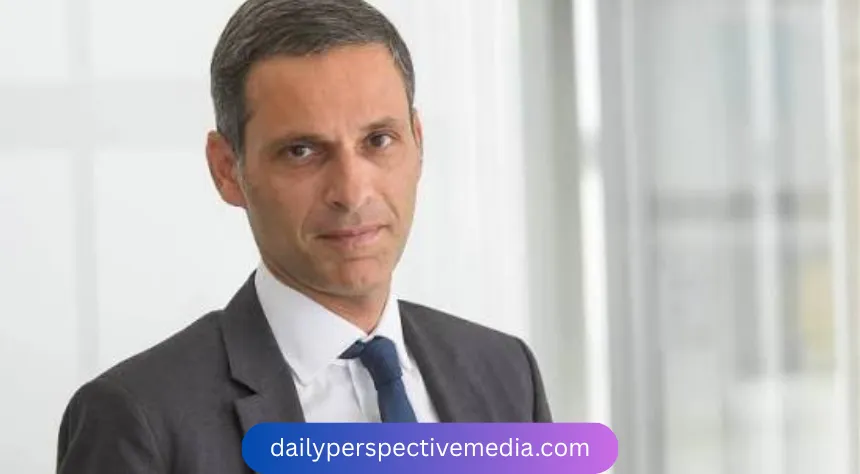
Rodolphe Saadé was born in Lebanon in 1970, into the family behind CMA CGM. His father, Jacques Saadé, founded the shipping business that later became central to Rodolphe’s professional life. That background gave him access to an established enterprise, but his eventual leadership followed years of operational responsibilities. Understanding this distinction helps explain his biography more accurately than simply describing him as an heir. His career developed within an organization where commercial decisions affected shipping routes, customers, and international relationships. The family connection explains his starting point; his later responsibilities show how that starting point developed into a substantial management career.
Education at Concordia University
Saadé studied at Concordia University in Montreal, earning a Bachelor of Commerce in 1994. His education placed him in an international environment before he assumed major responsibilities in shipping. Concordia’s account of his career also records an early entrepreneurial venture involving water dispensers. This experience adds a useful detail to his story because it shows commercial activity outside the family’s core industry. Rather than moving immediately from university into the top office, he developed through business experience and progressively larger assignments. For readers comparing Rodolphe Saadé and Greg Hayes, their educational foundations provide an early explanation of their different professional routes.
Learning the Shipping Business at CMA CGM
Rodolphe Saadé joined CMA CGM in 1994 and later managed shipping lines, including responsibilities connected with transatlantic and transpacific services. Such work involves more than moving containers between ports. Managers must consider customer demand, vessel capacity, scheduling, and the commercial performance of individual routes. His progression therefore matters because it placed him close to the practical business before he became its overall leader. By 2010, he had become vice chairman and participated in the group’s financial restructuring. That combination of operating experience and financial responsibility formed an important bridge between his early career and the strategic decisions that followed.
Becoming Chairman and Chief Executive Officer
2017 marked Saadé’s transition to overall leadership. He became chief executive in February and added the chairmanship in November. These were separate steps, a detail sometimes lost in brief executive profiles. His appointment represented a generational change within CMA CGM, with Jacques Saadé becoming founder-chairman. The transition also created a clear point from which to examine Rodolphe’s own strategic record. Leading an established shipping group required preserving customer relationships while deciding where the organization should expand. His subsequent career is best understood through those decisions, especially the effort to offer customers more services across the full journey of their goods.
Expanding Beyond Ocean Shipping
Under Rodolphe Saadé CMA CGM developed a broader transportation model encompassing shipping, logistics, and air freight. The group’s history identifies the creation of CMA CGM AIR CARGO in February 2021 as an important expansion. The commercial reasoning is straightforward: customers often need several transport services to complete one delivery. A shipment may require an ocean crossing, storage, customs handling, and an inland journey before reaching its destination. Offering more of those services can deepen customer relationships and create additional sources of revenue. It also increases organizational complexity, making coordination essential. Saadé’s expansion illustrates both the opportunity and the management demands of diversification.
CEVA Logistics and the Bolloré Acquisition
A major part of that strategy developed through CEVA Logistics and the acquisition of Bolloré Logistics, completed on February 29, 2024. The announced purchase price was €4.85 billion, based on estimated debt and cash at completion. CMA CGM described it as the largest acquisition in its history at that time. The transaction brought additional freight and logistics capabilities into the group. However, a purchase announcement represents the beginning of integration rather than its completion. Combining systems, teams, and customer services determines whether the expected benefits emerge. CEVA subsequently outlined an organizational transformation designed to bring the expanded capabilities together more effectively.
Saadé’s Education and Community Initiatives
Saadé’s public profile also includes educational support. In July 2025, Concordia announced a €1 million scholarship initiative supporting 20 graduate students through the CMA CGM Excellence Fund. The arrangement allocated support to 15 international students and five Lebanese students, covering tuition and living expenses. This provides a specific, verifiable example of his connection with education beyond his own university years. It also reconnects two parts of his biography: his Lebanese background and his studies in Canada. Such initiatives should be assessed through their stated commitments and outcomes, while remaining distinct from evaluations of the company’s commercial performance or wider social responsibilities.
Greg Hayes’s Education and Financial Foundation
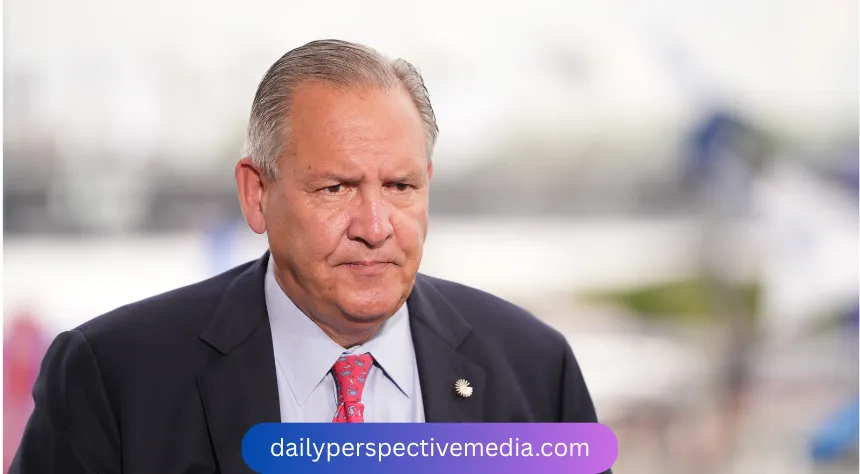
Greg Hayes, formally known as Gregory J. Hayes, earned a bachelor’s degree in economics from Purdue University in 1982 and became a Certified Public Accountant. His background is significant because his career developed through financial and corporate responsibilities before reaching the chief executive’s office. Economics and accounting provide tools for understanding costs, investment choices, and organizational performance. They do not automatically produce effective leadership, but they help explain the professional foundation on which Hayes built his career. Unlike Saadé’s route through a family shipping company, Hayes’s biography centers on advancement within large industrial organizations and increasing responsibility for their financial and strategic direction.
Rising Through United Technologies
Hayes joined United Technologies in 1999 through its merger with Sundstrand Corporation. He later served as chief financial officer from 2008 to 2014, before becoming chief executive in 2014. This progression placed him at the center of decisions about investment, performance, and the company’s structure. His rise illustrates a route to leadership built around detailed knowledge of a large organization rather than the creation of a new enterprise. Financial leadership also exposed him to the relationship between individual operating businesses and the wider group. That perspective became especially relevant when he began reshaping United Technologies through major sales, acquisitions, and corporate separations.
Reshaping an Industrial Conglomerate
Hayes’s leadership involved changing what United Technologies owned and where it concentrated its resources. Important milestones included the sale of Sikorsky Aircraft in 2015, the acquisition of Rockwell Collins in 2018, and the separation of Carrier and Otis in 2020. Together, these decisions moved the organization toward a stronger aerospace focus. They also demonstrate that corporate growth does not always mean retaining every business. Sometimes leaders sell or separate activities to create a clearer direction. This provides a useful comparison between Rodolphe Saadé and Greg Hayes: Saadé extended a transport network, while Hayes helped redraw the boundaries of an industrial group.
The Merger That Created Raytheon Technologies
On April 3, 2020, United Technologies completed the separation of Carrier and Otis and combined its remaining aerospace businesses with Raytheon Company. The resulting organization became Raytheon Technologies, later known as RTX. Hayes became chief executive of the combined company. The transaction brought together businesses serving commercial aviation and defense customers, creating a different organization from the former industrial conglomerate. Its significance extends beyond the size of the deal: combining major companies requires integration of management structures, reporting processes, and operating priorities. This milestone established the setting for the final major executive chapter of Hayes’s career and remains central to understanding his professional legacy.
Operational Challenges and Leadership Transition
Hayes’s RTX tenure also included difficult operational issues. In 2023, RTX disclosed expanded inspections and engine removals related to a powder-metal manufacturing condition affecting certain Pratt & Whitney geared turbofan engines. Such problems show why a biography should consider execution alongside acquisitions. Hayes handed the CEO role to Christopher Calio on May 2, 2024, and stepped down as executive chairman and a director on April 30, 2025. His announced special-adviser term ran through January 2, 2026. As of this article’s update, Phillips 66 identifies him as its lead independent director, while BD lists him as a director. Describing him as RTX’s current CEO would therefore be outdated.
Conclusion: Rodolphe Saadé and Greg Hayes in Perspective
Rodolphe Saadé and Greg Hayes illustrate two different routes to influence in global industry. Saadé’s career connects family succession, shipping experience, and expansion into wider logistics services. Hayes’s career connects financial expertise, industrial restructuring, and the formation of a major aerospace and defense group. Their records also show why leadership requires more than announcing large transactions: integration, operating reliability, and succession shape the results over time. These observations are a comparison of their documented decisions, rather than a claim that their personalities or management methods are identical. Understanding their separate timelines gives readers a clearer, more useful picture of what each executive contributed.
FAQ: Who Are Rodolphe Saadé and Greg Hayes?
Rodolphe Saadé is chairman and chief executive officer of CMA CGM, while Greg Hayes is a former chief executive and executive chairman of RTX. Both are associated with organizations whose activities reach far beyond a single domestic market. Their careers are often useful subjects for comparison because they involve large operating networks, major acquisitions, and long-term investment decisions. However, each man’s professional identity belongs to a distinct industry and corporate history. Saadé is primarily associated with shipping and logistics, whereas Hayes is associated with industrial management, aerospace, and defense. Keeping those differences clear prevents a combined biography from blurring their individual achievements.
FAQ: Are They Business Partners?
The sources reviewed for this article do not establish a joint venture, business partnership, or family relationship between the two executives. Their names appear together here because their careers offer a useful comparison. Readers should distinguish that editorial choice from evidence of a direct connection. Large companies can operate within overlapping supply chains without their leaders having a publicly documented personal partnership. Establishing a specific connection would require evidence such as a company announcement, transaction filing, or an attributable statement. Without that evidence, it is more accurate to present their biographies separately and compare the documented professional decisions that make each career notable.
FAQ: What Is Rodolphe Saadé Best Known For?
Saadé is best known for leading CMA CGM and developing its wider transport and logistics capabilities. His career combines the continuation of a family enterprise with efforts to broaden the services it offers customers. A particularly useful way to understand that development is to follow the movement from ocean shipping toward more complete delivery solutions. The Bolloré Logistics acquisition provides one concrete example of that direction. Nevertheless, his significance should not be reduced to a single purchase. His role involves setting priorities for an organization whose different services must work together. That continuing responsibility is central to his public identity as a corporate leader.
FAQ: Is Greg Hayes Still the CEO of RTX?
No. Greg Hayes ceased serving as RTX’s CEO in May 2024. Christopher Calio succeeded him, and Hayes subsequently left the executive chairmanship in April 2025. RTX’s 2026 proxy statement confirms the relevant succession dates. Older profiles may still display former titles, which makes publication dates especially important when researching executives. A current biography should distinguish between a past operating role, a temporary advisory appointment, and an outside board position. Those responsibilities carry different authority and should not be treated as interchangeable. For Hayes, the accurate description is a former RTX chief executive whose later public activities include corporate governance roles at other companies.
FAQ: What Are Their Net Worths?
This article does not assign a precise personal net worth to either executive because company size, executive compensation, and personal wealth measure different things. A company’s revenue belongs to the organization, while an individual’s wealth depends on ownership interests, other assets, and liabilities. Family business estimates can introduce further uncertainty when published figures combine several relatives’ holdings. Similarly, a public company’s compensation disclosures do not provide a complete inventory of an executive’s personal finances. Any wealth comparison should therefore identify its source, valuation date, and methodology. Without those details, apparently precise figures can give readers more confidence than the available evidence justifies.
FAQ: What Can Readers Learn From Their Careers?
The careers of Rodolphe Saadé and Greg Hayes suggest that professional development benefits from both specialized knowledge and a wider understanding of how organizations work. Saadé’s operational experience and Hayes’s financial background provided different foundations for later responsibility. Their major corporate decisions also show that strategy involves choosing which capabilities to build, acquire, retain, or separate. These are interpretations of their career histories rather than guaranteed rules for success. Readers can apply the broader lesson by learning how their own responsibilities connect with customers, finances, and long-term priorities. Advancement becomes more meaningful when increasing authority is matched by stronger judgment and accountability.